
When to pay OpenAI vs when to pay Anthropic
Updated| July 24, 2026
Deciding between ChatGPT Plus and Claude Pro? We breakdown pricing, 200k context windows, coding benchmarks, and usage limits across both $20 plans.
TL;DR: Both ChatGPT Plus and Claude Pro cost $20 per month, but they are built for fundamentally different work styles. ChatGPT Plus is the ultimate generalist toolkit offering native voice modes, image generation, web search, and custom GPTs. Claude Pro is a deep work tool excelling at 200,000-token document analysis, long-form writing, and complex software architecture. Rather than locking yourself into a single $20 ecosystem, platforms like
Table of Contents
The $20 breakdown: Features, limits, and pricing compared Head-to-head test 1: Long documents and natural writing Head-to-head test 2: Code architecture, reasoning, and debugging The usage limit trap: How message caps cut your work short Why cross-examining both models on Eye2.AI beats a single subscription Frequently asked questions
The $20 breakdown: Features, limits, and pricing compared
While both plans share the same baseline sticker price, their underlying restrictions and included toolkits diverge significantly.
| Feature / Metric | ChatGPT Plus ($20/mo) | Claude Pro ($20/mo or $17/mo annual) |
| Primary Models | GPT-4o, o3-mini, GPT-5 series | Claude 3.5 Sonnet, Claude Opus, extended thinking |
| Context Window | ~128k tokens standard | 200k tokens standard |
| Throttling Mechanism | Fixed message caps (e.g., 160 messages / 3 hours) | Rolling compute budget (5-hour session limits + weekly cap) |
| Image & Media Generation | Integrated image creation, video previews, and native vision | Image reading/vision only; no image or video generation |
| Voice Mode | Advanced real-time two-way voice conversation | Dictation/speech-to-text input only |
| Organizational Tools | Custom GPTs and Memory system | Claude Projects (attached knowledge files & persistent rules) |
Head-to-head test 1: Long documents and natural writing
When processing dense legal contracts, academic PDFs, or long articles, the structural differences between these two networks become immediately clear.
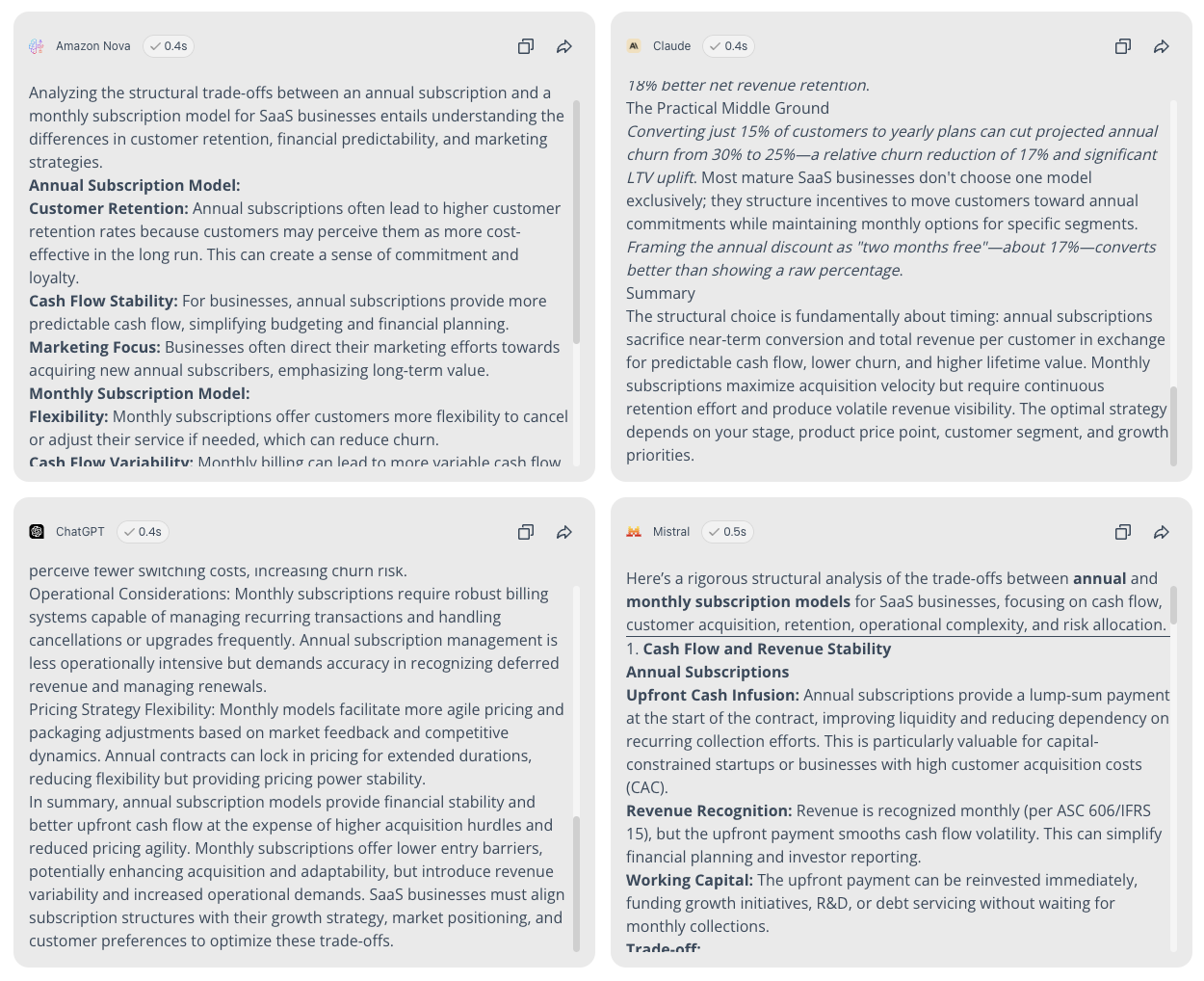
The Claude Advantage: Claude 3.5 Sonnet handles 200,000 tokens (roughly 150,000 words) in a single prompt. As shown in real Eye2.AI comparison queries, Claude structures SaaS subscription analysis with deep financial nuance—breaking down LTV ratios, net revenue retention (NRR), and exact churn percentages across customer segments.
The ChatGPT Trade-off: While ChatGPT handles short-form copy, social posts, and summaries quickly, it tends to adopt a generic, overly high-level corporate voice. Its responses stick to broad conceptual bullet points rather than delivering hard operational math unless explicitly forced through complex prompt engineering.
Head-to-head test 2: Code architecture, reasoning, and debugging
For software developers, comparing the two platforms involves weighing raw syntax accuracy against multi-step problem planning.
Cost-Per-Million Tokens Benchmark (Input / Output):
ChatGPT (GPT-4o): $2.50 / $10.00
Claude (3.5 Sonnet): $3.00 / $15.00
(Data derived from official developer API pricing documentation.)
According to developer benchmark evaluations like HumanEval, Claude 3.5 Sonnet leads on pure Python code generation with a 92.0% pass@1 rating, compared to GPT-4o at ~90.2%. On agentic coding benchmarks like SWE-bench Verified, Claude pulls even further ahead with a 49% score vs GPT-4o's 33%.
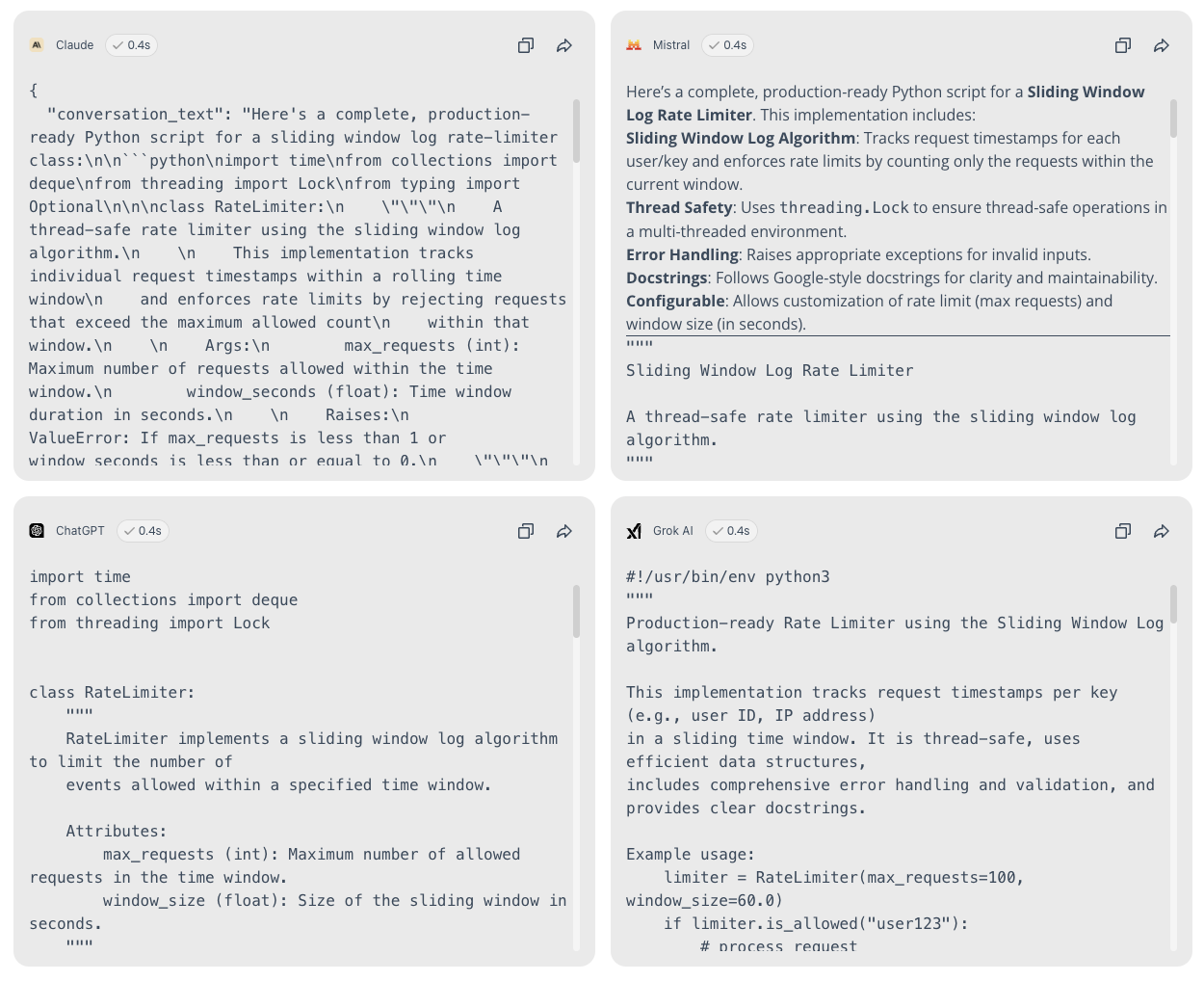
Writing full features: Live tests on Eye2.AI reveal that Claude outputs complete, production-ready Python classes with Google-style docstrings, thread-safety locks, and detailed exception handling.
Planning and tool calling: OpenAI models (like GPT-4o) excel at rapid prototyping and clean class structures. However, in live tests, ChatGPT's code output occasionally requires extra iterations to implement full multi-key tracking compared to Claude's out-of-the-box solution.
The usage limit trap: How message caps cut your work short
The biggest source of frustration for paid subscribers is hitting unexpected usage walls.
ChatGPT Plus Message Hard Caps: OpenAI enforces a fixed message counter (such as 160 messages every 3 hours on standard models). Once you hit that limit, the system downgrades your session to a smaller, less capable model until the timer resets.
Claude Pro Compute Rolling Budgets: Anthropic measures total computational load rather than individual messages. If you upload massive 100,000-token PDFs into a conversation, a few turns can consume your entire 5-hour rolling compute budget, locking you out mid-project.
Why cross-examining both models on Eye2.AI beats a single subscription
Buying separate $20 subscriptions for both services costs $40 per month and forces you to constantly jump between open browser tabs.
Simultaneous Model Runs: Input a single prompt and watch ChatGPT, Claude, Gemini, and DeepSeek generate answers side-by-side in real time.
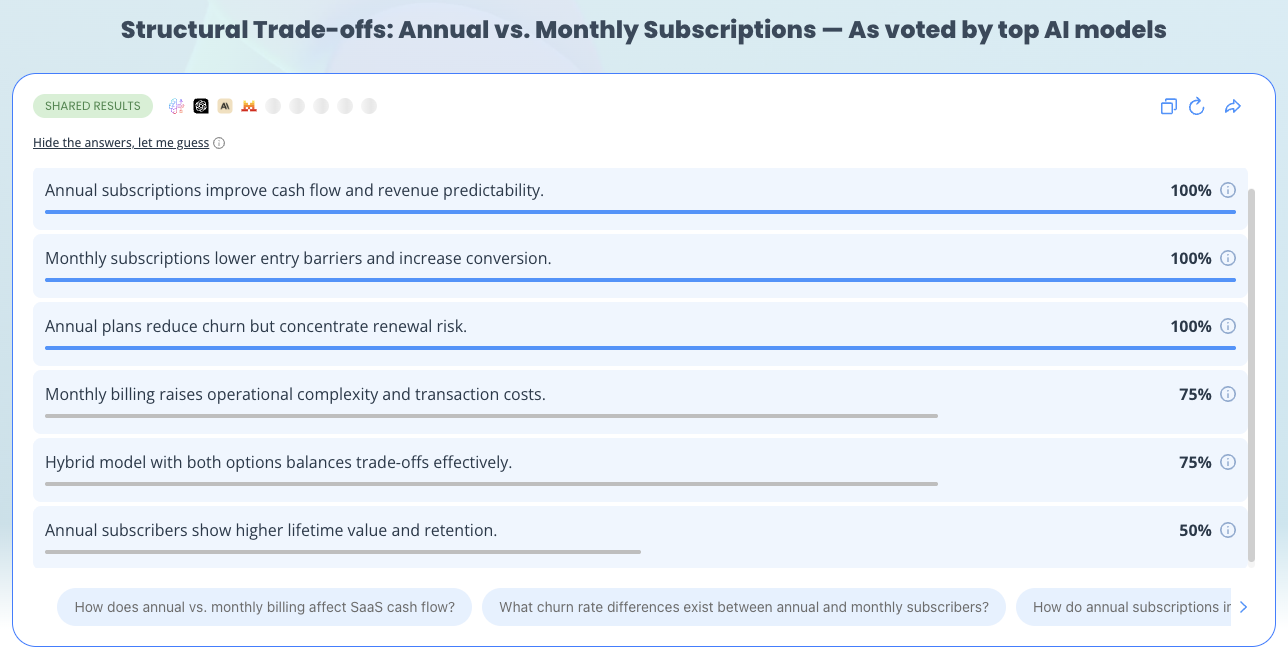
The Shared Results: Instantly verify whether both platforms agree on technical claims, code logic, or historical data.
Zero Account Tracking: Query both platforms through enterprise API tunnels with no login required, no email tracking, and no permanent chat history logs, keeping your research completely private.
FAQs
1. Is Claude Pro cheaper than ChatGPT Plus?
Both plans cost $20 per month when paid monthly. However, Claude Pro offers an annual plan for $17 per month ($204 billed upfront), making it slightly cheaper over a full year.
2. Which AI model is better for coding, ChatGPT or Claude?
Claude 3.5 Sonnet generally scores higher on pure code generation benchmarks (92.0% vs 90.2% on HumanEval; 49% vs 33% on SWE-bench) and writes cleaner, production-ready code with fewer placeholders.
3. Can I try both models for free on Eye2.AI?
Yes. You can enter your query on
By using Eye2.ai, you agree to the Terms and Privacy Policy. Outputs may contain errors.
Download the Eye2.ai app on:

