
Why the ultimate AI sports betting consensus completely collapsed at Shinnecock Hills
Updated| June 23, 2026
We tracked the 2026 U.S. Open predictive data across 12 premium AI engines. See how the models built a 100% consensus for the wrong favorite and missed the champion.
Ofer Tirosh is the founder and CEO of Tomedes, a language technology and translation company that supports business growth through a range of innovative localization strategies. He has been helping companies reach their global goals since 2007.
TL;DR: Sports analytics in June 2026 just received a massive reality check. Heading into the 126th U.S. Open at Shinnecock Hills, a parallel query run across elite artificial intelligence engines on Eye2.AI yielded a unanimous 100% data consensus backing world No. 1 Scottie Scheffler to coast to a championship victory. Instead, golf fans witnessed a stunning wire-to-wire upset by Wyndham Clark, proving that even the most confident multi-model algorithmic forecasts can be completely shattered by a dark horse on Sunday.
Table of Contents
Inside the unanimous AI consensus that missed the mark How Wyndham Clark defied the odds and a hostile New York gallery Where the top model predictions completely derailed Why cross-examining multiple models saves your bankroll Frequently asked questions
Inside the unanimous AI consensus that missed the mark
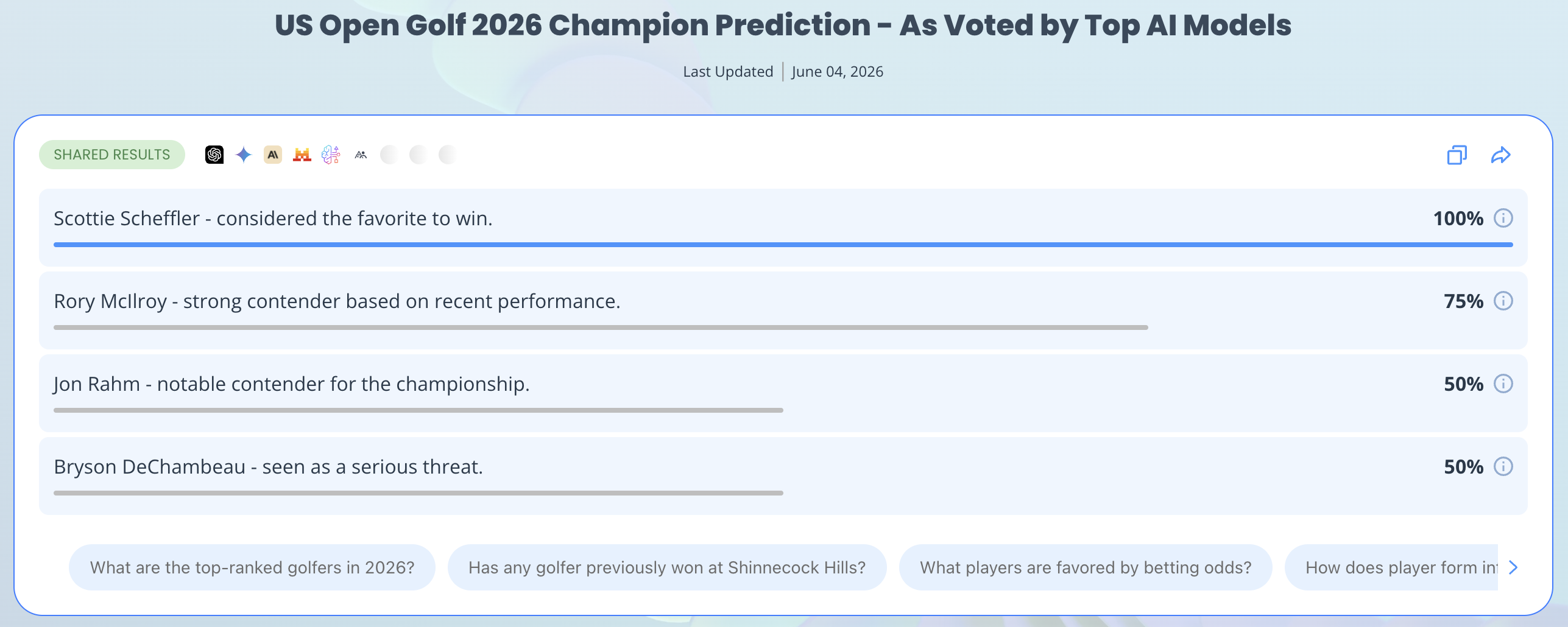
As captured in the
The Scheffler lock (100% agreement): Every single major platform (including Claude, Gemini, and ChatGPT) identified Scottie Scheffler as the undisputed player to beat. Fresh off a major victory at the 2026 Masters, Scheffler was mathematically modeled with the highest implied probability of completing his career Grand Slam on his 30th birthday.
The trailing contenders: Rory McIlroy secured a strong 75% confidence score, while Jon Rahm and Bryson DeChambeau split a 50% threat assessment.
The silent variable: Noticeably absent from any of the top-tier AI consensus slots was Wyndham Clark, who the models largely overlooked due to a prolonged mid-season slump prior to arriving on Long Island.
How Wyndham Clark defied the odds and a hostile New York gallery
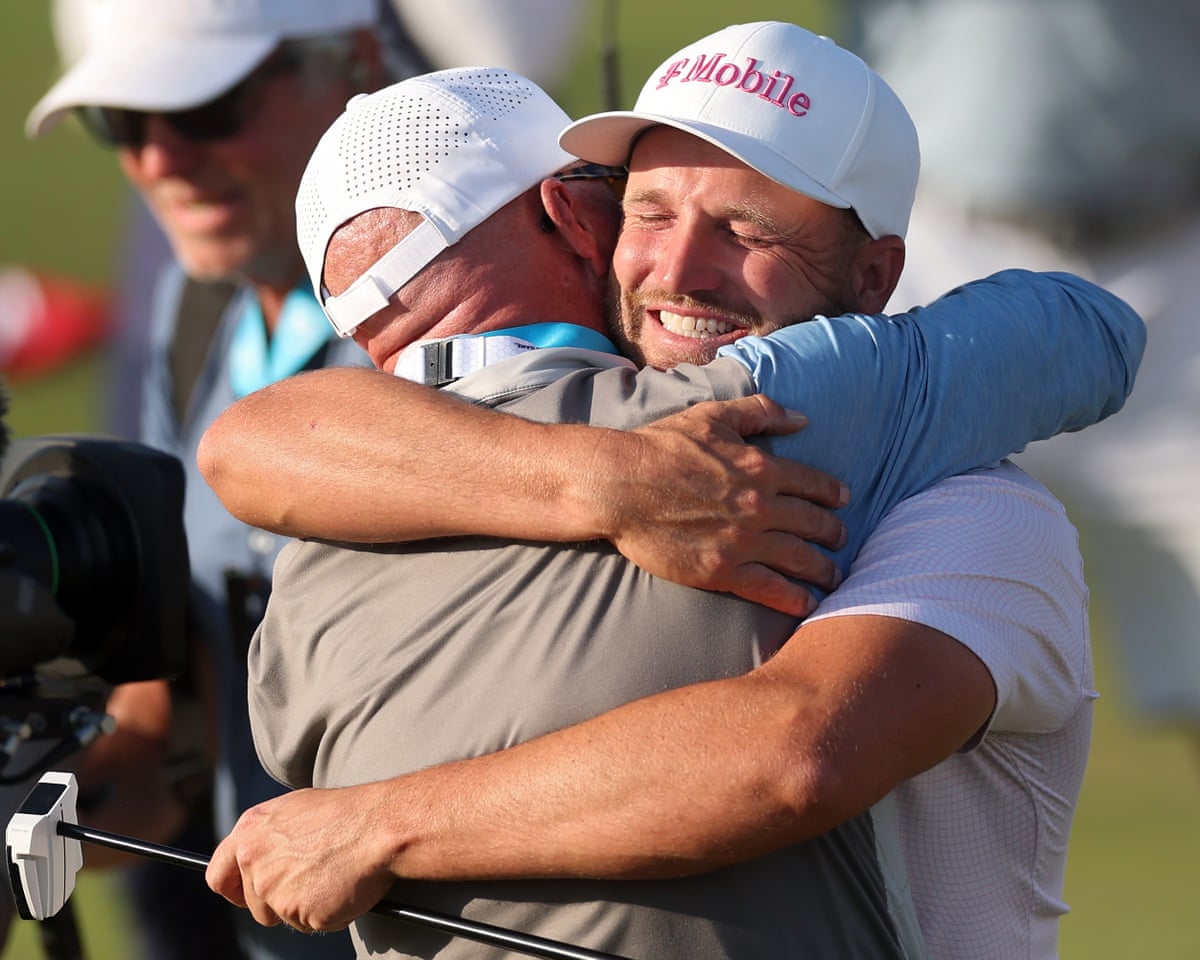
What unfolded at Shinnecock Hills defied every data stream in the tech ecosystem. Clark didn't just win; he dominated from the opening tee shot.
A rare wire-to-wire masterclass: Opening the tournament with a blistering 6-under 64, Clark became only the ninth player in U.S. Open history to hold the outright lead after all four rounds.
Defeating the crowd and the favorite: Paired directly with the popular Scottie Scheffler on Sunday, Clark had to block out a highly partisan, pro-Scheffler gallery that actively cheered his missed putts and errors.
Clutch execution at the 72nd hole: Despite his massive six-shot lead shrinking to just one under a furious final-round charge from Sam Burns, Clark displayed nerves of steel, two-putting from 50 feet on the 18th green to capture his second U.S. Open trophy at 4 under par.
Where the top model predictions completely derailed
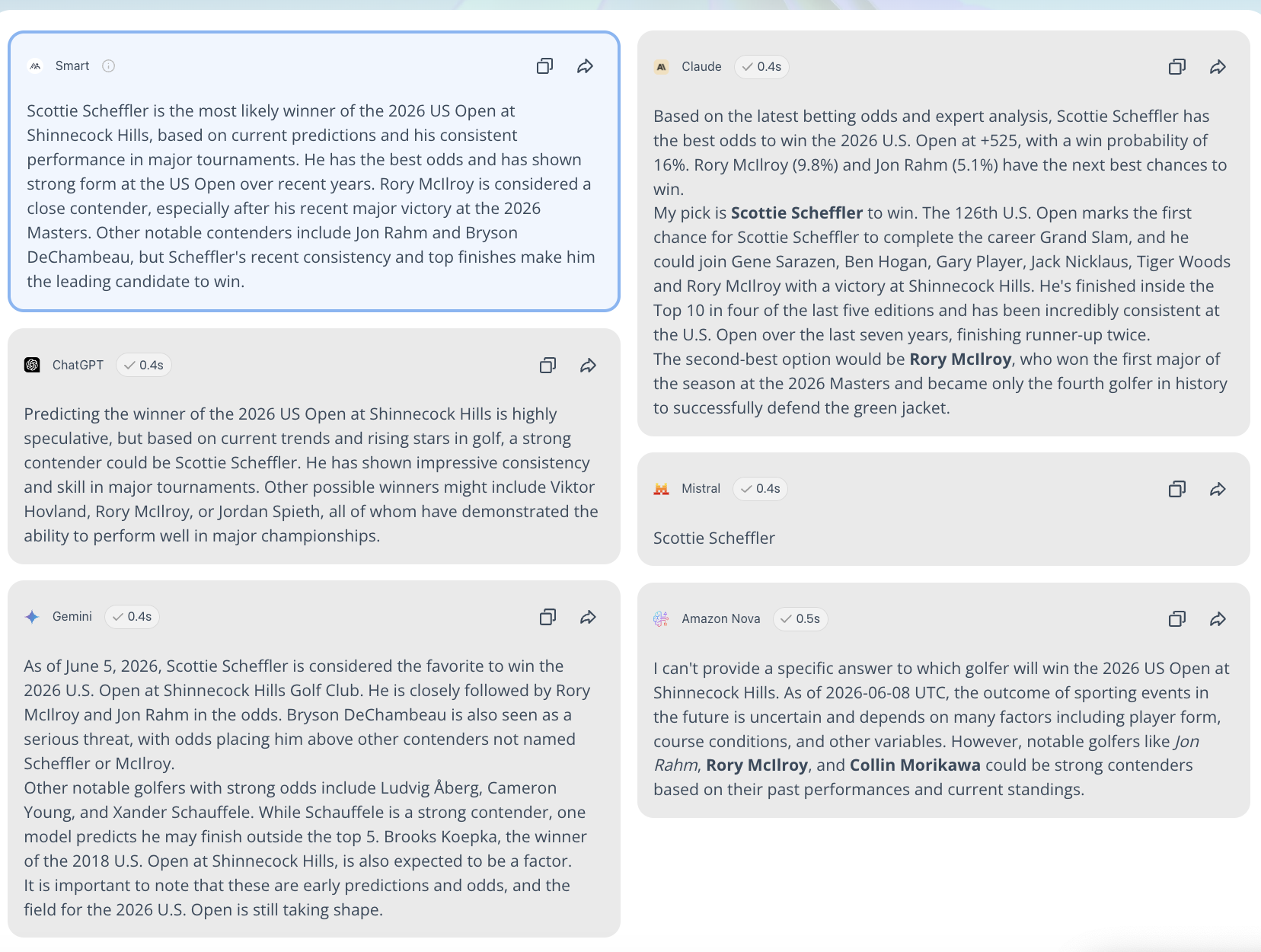
Reviewing the individual breakdowns on the Eye2.AI Shared Results dashboard reveals a stark look at the blind spots of modern algorithmic modeling:
| AI Model | Pre-Tournament Verdict | What Actually Happened |
| Claude | Scottie Scheffler (1st) | Backed Scheffler's career Grand Slam narrative; Scheffler finished T-4 at even par. |
| Smart | Scottie Scheffler (1st) | Heavily weighted Masters consistency over Shinnecock’s specific fescue variables. |
| Gemini | Rory McIlroy / Jon Rahm | Listed Ludvig Åberg and Brooks Koepka as key dark horses, missing Clark entirely. |
| Amazon Nova | Uncertain / Safe Hold | Deflected from a firm choice, listing Morikawa and McIlroy based on broad standings. |
Why cross-examining multiple models saves your bankroll
Predicting live sporting events is a chaotic science. If you rely exclusively on a single chatbot to build a sports betting slip or draft an analytical sports column, you run right into severe confirmation bias.
Had you only queried Claude or Smart, you would have walked away believing a Scheffler victory was a mathematical certainty. This is where the true value of Eye2.AI comes into play. By throwing your query across 12+ separate networks simultaneously, you can actively track the divergence in their logic.
When the 'Shared Results' shows a 100% tight clustering on a single favorite in a highly volatile sport like golf, it acts as an immediate contrarian red flag for smart analysts. It alerts you that the entire AI landscape is merely repeating the same historical pattern loop (allowing you to look past the hype, spot hidden value in the field, and catch underdog payouts completely missed by the machines) with no account signup or login required.
FAQs
1. Where did Scottie Scheffler finish in the 2026 U.S. Open?
Despite entering the final round in the premier pairing alongside Wyndham Clark, Scheffler carded a 71 on Sunday to finish tied for fourth place at even par.
2. What was the total purse and winner's share for the tournament?
The USGA bumped the record-breaking 2026 purse up to $22.5 million, with Wyndham Clark taking home a historic $4.5 million winner's share.
3. How do I test live tournament predictions on Eye2.AI?
Simply head to the unified search box, enter your specific upcoming sports matchup, and analyze how the world's leading intelligence engines align or split on the variables in real time.
By using Eye2.ai, you agree to the Terms and Privacy Policy. Outputs may contain errors.
Download the Eye2.ai app on:

